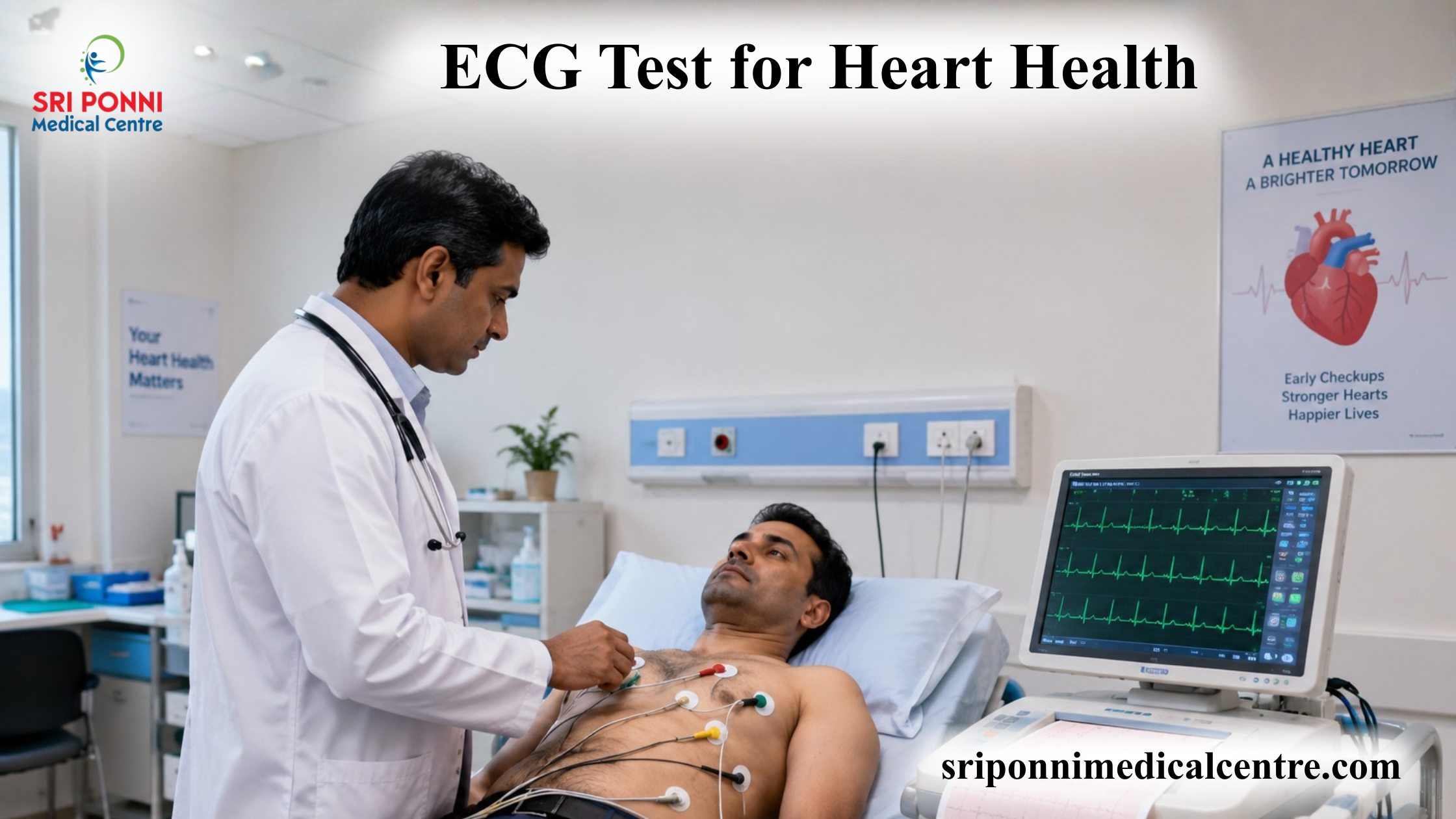
Chest discomfort, palpitations, dizziness, or shortness of breath can sometimes prompt a doctor to examine the heart’s electrical activity. An ECG test for heart health is a quick, non-invasive way to record these signals and identify changes in rhythm or electrical conduction.
It may also be considered for people with known cardiac conditions, certain risk factors, or those requiring monitoring before selected procedures. Results are interpreted together with symptoms, medical history, examination findings, and additional investigations when necessary.
What Does an ECG Show?
It can provide information about heart rate, rhythm, and the way electrical signals travel through the cardiac muscle.
It may also reveal certain patterns that require further assessment. A chest pain evaluation is one situation where this recording may form part of the clinical assessment.
An ECG is one of the commonly used diagnostic tests for evaluating heart rhythm and electrical activity; learn more in Common Medical Diagnostic Tests and What They Detect?
When Is an ECG Test for Heart Health Recommended?
A doctor may recommend it when symptoms or examination findings suggest that electrical activity needs closer evaluation.
Common reasons
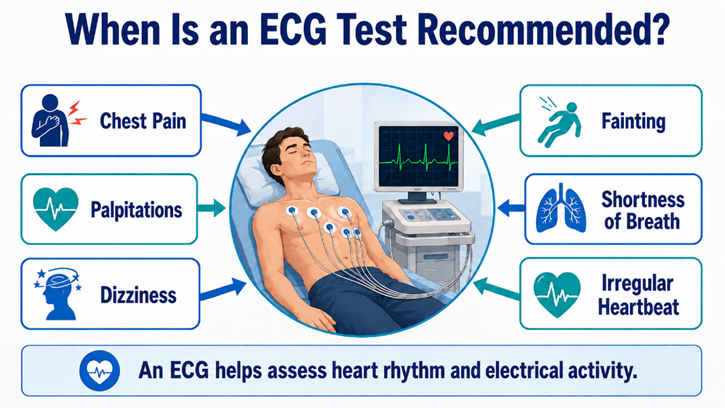
- Chest pain or pressure
- Palpitations or a racing pulse
- Unexplained dizziness
- Causes of fainting requiring investigation
- Shortness of breath
- An irregular pulse
- Monitoring an existing cardiac condition
- Medicines that may affect rhythm
- Pre-procedure assessment when appropriate
An ECG is commonly considered when symptoms, risk factors, or clinical findings raise concerns about cardiac rhythm or electrical activity.
Symptoms vs Routine Monitoring
An ECG test for heart health may serve different purposes depending on whether symptoms are new, recurring, or already being monitored.
For a detailed overview of ECG indications, procedure, and its clinical significance, read the Electrocardiogram article on NCBI Bookshelf.
Palpitations causes can vary, meaning an ECG is only one part of the assessment. Similarly, shortness of breath causes may involve cardiac, respiratory, or other conditions, so further investigation may sometimes be required.
Medical Note: Seek urgent medical attention for severe chest pain, sudden breathing difficulty, fainting, or rapidly worsening symptoms.
For more useful information on symptoms, prevention, health screening, and other common health concerns, explore Important Health Topics Every Patient Should Know.
Evaluation at Sri Ponni Medical Centre
Sri Ponni Medical Centre provides ECG recording, clinical review, and follow-up guidance based on individual symptoms and risk factors. Patients experiencing chest discomfort, palpitations, dizziness, or related concerns can receive appropriate evaluation to determine the next step.