Common Medical Diagnostic Tests and What They Detect?
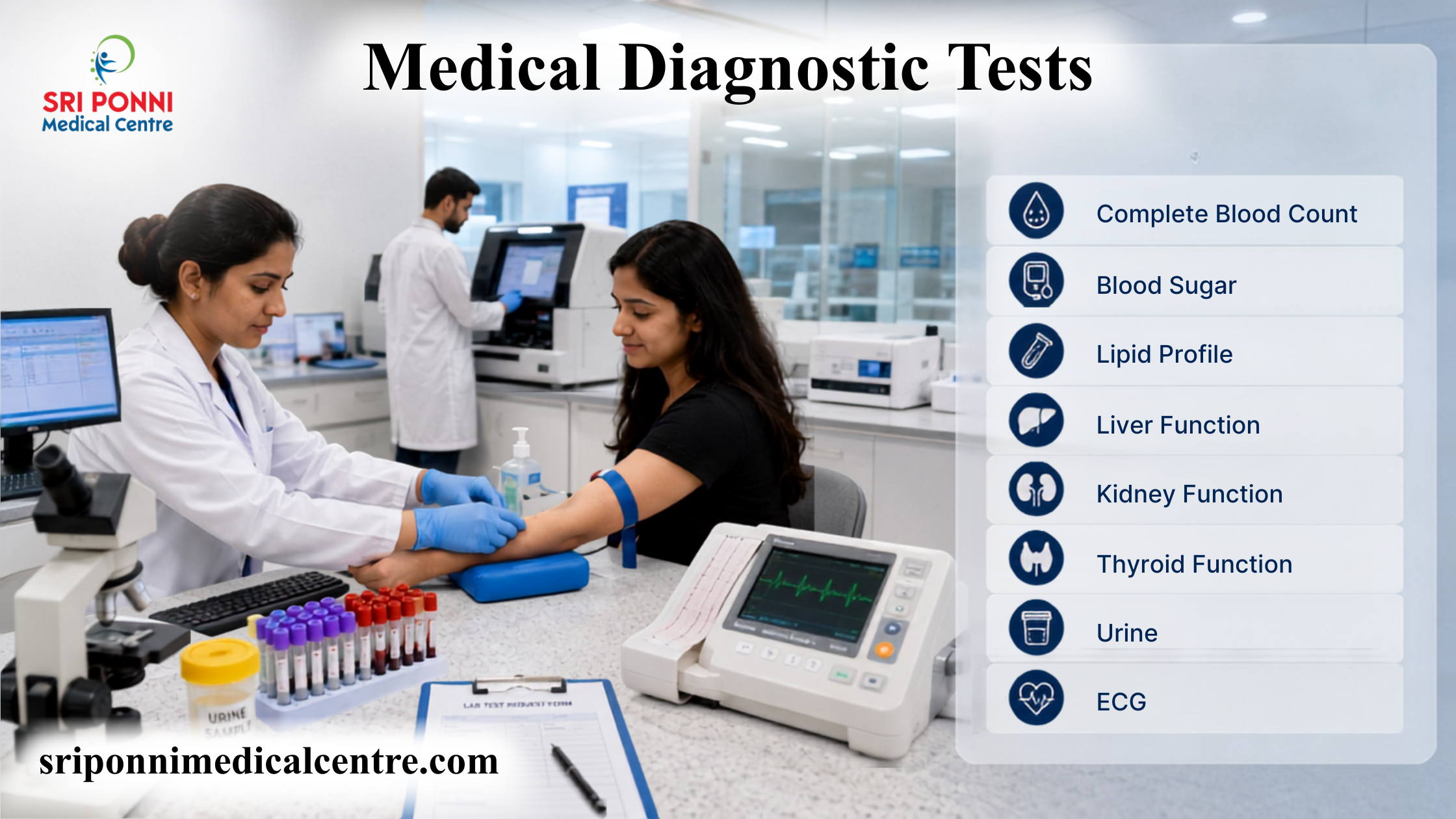
Finding the cause of a symptom may require more than a physical examination. Doctors may use blood & urine examine, heart monitoring, or imaging to understand what may be happening inside the body. Medical Diagnostic Tests can help identify abnormalities, assess organ function, and investigate possible causes of symptoms.
Each provides different information, and the choice depends on a person's symptoms, medical history, and clinical findings. Understanding what common tests are used for can help you know why a particular investigation may have been recommended.
Read more the detailed Guide on Disease Awareness and Preventive Healthcare for Better Health
Common Tests and What They Can Detect
A clinical laboratory analysis can provide valuable information about different body functions.
These are not all provide the same information. A doctor may recommend one test or a combination of tests depending on the clinical situation.
Learn about Tests which are required for the star health insurance claiming purpose .
When Are Medical Diagnostic Tests Recommended?
Doctors may recommend Diagnosis when symptoms continue without a clear explanation or when an earlier examination shows an unusual finding. It can also be useful for monitoring an existing condition or evaluating the response to treatment.
Common reasons include:
Persistent tiredness, pain, fever, or unexplained weight changes
Suspected infection
Abnormal glucose or blood pressure readings
Monitoring diabetes, thyroid, liver, or kidney conditions
Follow-up after treatment
An unusual report does not always confirm a disease. Further evaluation over a Medical Expert (Doctor) Discussion may be required to understand what the result means.
How Do Imaging Examinations Support Diagnosis?
Where Imaging examinations allow doctors to examine structures inside the body that cannot be assessed through blood or urine examine alone.
Different imaging methods are used for different medical concerns:
X-rays: Commonly used to examine bones and certain chest conditions
Ultrasound: Helps assess organs and soft tissues
CT scans: Provide detailed cross-sectional images of the body
MRI: Provides detailed images of areas such as the brain, spine, joints, and other soft tissues
These investigations form part of different disease diagnosis methods selected according to the suspected condition.
What Happens After an Abnormal Result?
After Medical Diagnostic Tests, doctors review the findings alongside symptoms and medical history. Unusual blood results or imaging findings may lead to repeat Examine, additional investigations, monitoring, or treatment.
The purpose of diagnosis is to provide information that helps doctors understand a medical concern and decide on the appropriate next step.
For tests used before noticeable symptoms appear, read our guide on the Importance of Preventive Health Screening for Early Detection.