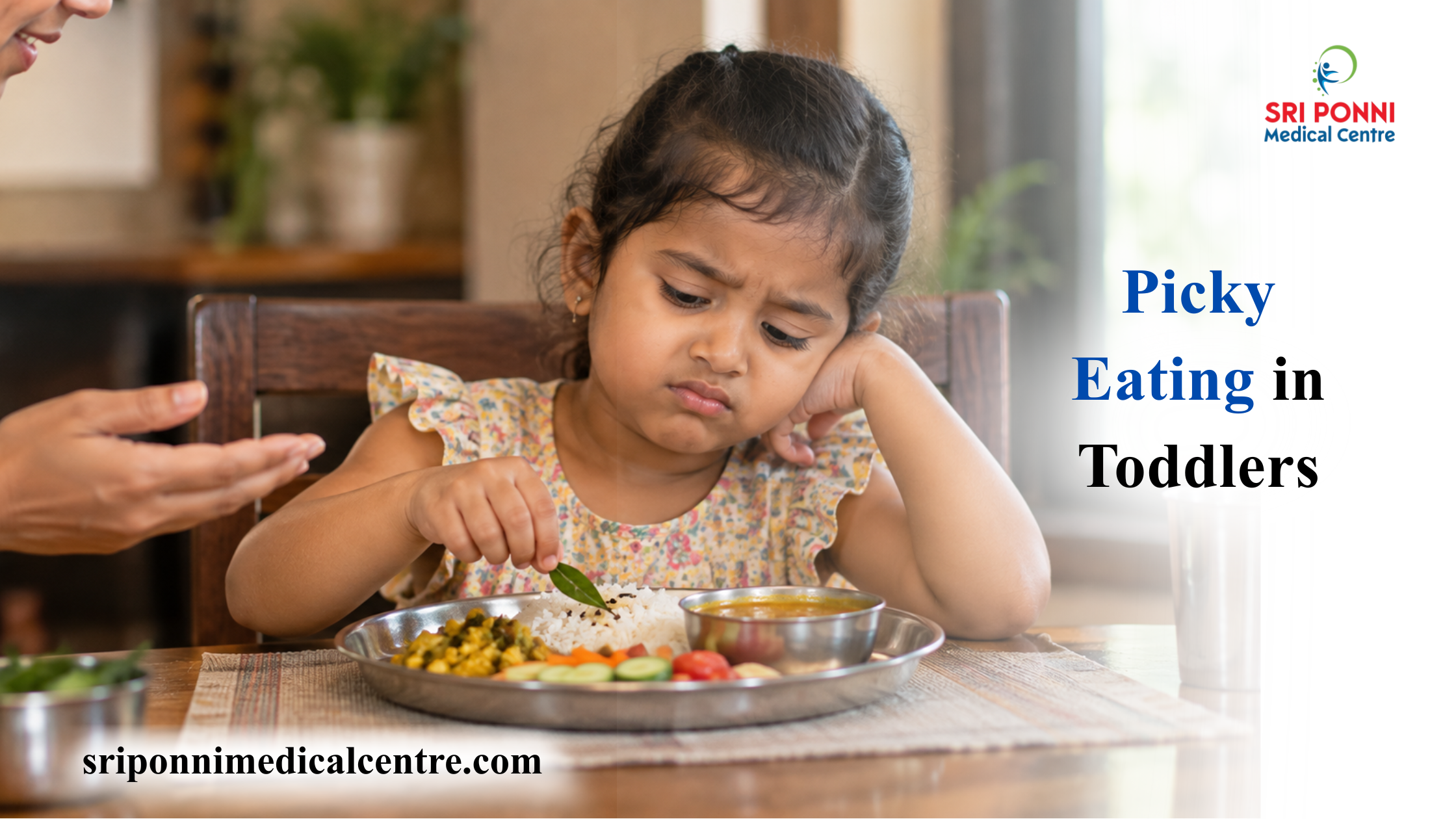
Many parents notice that their toddler suddenly refuses certain foods, eats only a few favourite items, or changes their eating habits from one day to another. This can create concerns about whether the child is getting enough nutrition. Picky eating in toddlers is a common phase as children develop their own food preferences and independence.
However, when food refusal becomes extreme, affects growth, or limits important nutrients, it may need closer attention. Understanding the reason behind selective eating and knowing what signs to watch can help parents support healthier eating habits without creating stress around mealtimes.
Why Does Picky Eating in Toddlers Happen?
Toddlers may become selective with food for several normal developmental reasons:
🍽️ Exploring Food Preferences
Children are learning new tastes, textures, smells, and flavours. They may accept a food one day and refuse it the next.
👶Growing Independence
Saying “no” to certain foods can be a way for toddlers to express control during mealtimes.
🥣Changes in Appetite
Growth slows slightly during toddler years, so their appetite may naturally vary compared with infancy.
🥕Food Texture Sensitivity
Some children may avoid foods because of texture, appearance, or how the food feels while chewing.
Children may experience different health concerns as they grow, from feeding difficulties to recurring coughs.
Read Why Is My Child Coughing at Night? to understand common causes of night-time coughing and when children may need medical attention.
Parents encourage better eating habits
Instead of forcing children to eat, parents can create a positive food environment.
Try these simple approaches:
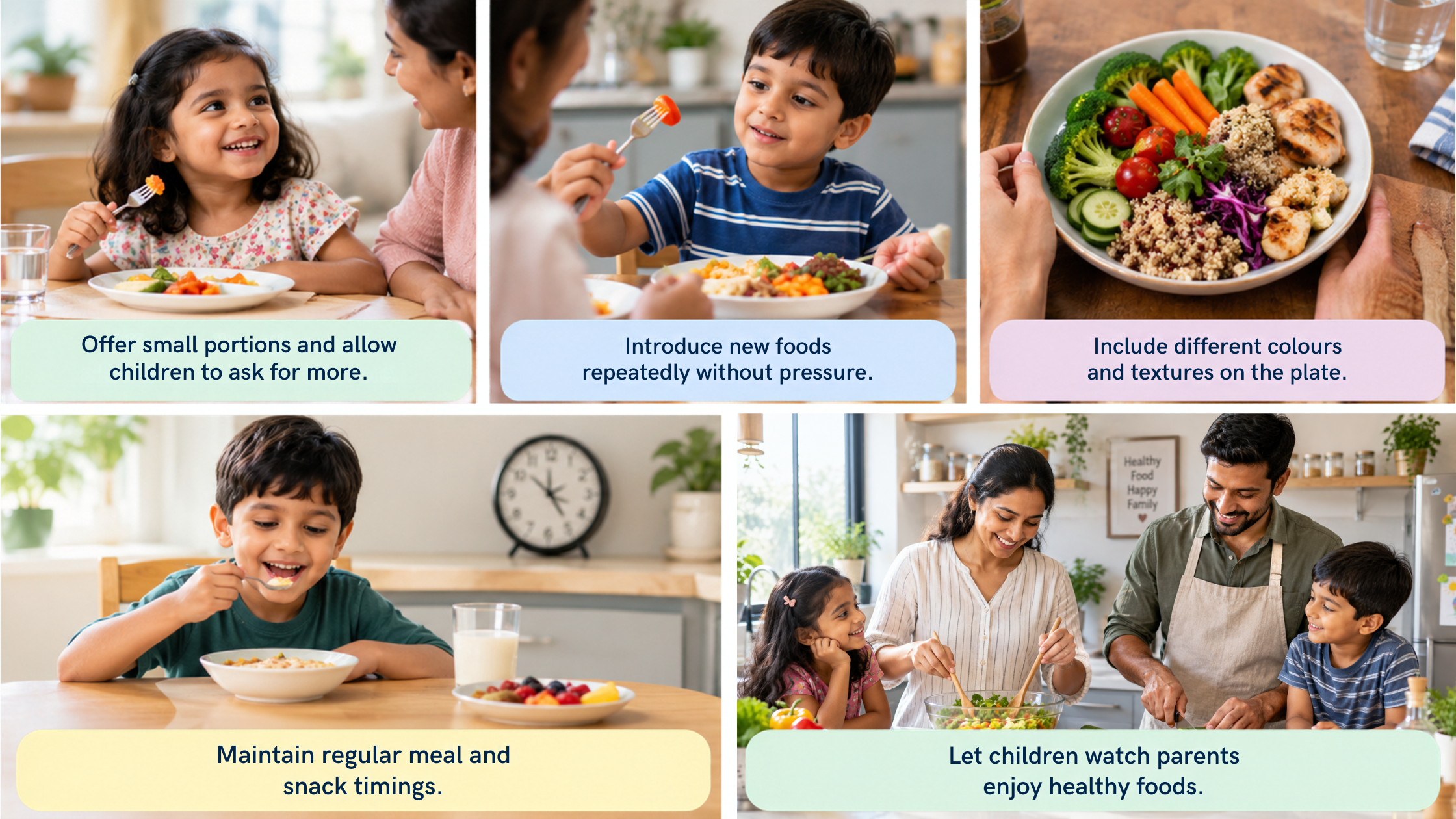
Healthy eating habits for kids develop gradually through repeated exposure and positive experiences with food.
A toddler may need several attempts before accepting a new food. Patience works better than forcing.
When should parents be concerned?
Occasional food refusal is usually normal. However, parents should seek medical advice if eating difficulties affect nutrition, growth, or daily activities. Watch for:
- Eating only a very small range of foods for a long time.
- Avoiding complete food groups such as proteins or vegetables.
- Difficulty chewing or swallowing.
- Poor weight gain or changes in growth pattern.
- Low energy or frequent tiredness.
These signs may indicate toddler nutrition problems that need evaluation by a pediatrician.
Repeated food refusal can make it difficult for toddlers to get the nutrients they need for healthy growth. Learn more about picky eating in young children and approaches to managing feeding difficulties in this research article on picky eating and feeding difficulties in children
Parents should remember that every child develops different preferences. A calm approach, balanced food choices, and regular monitoring can make mealtimes easier.
For more information about childhood concerns, explore Common Health Issues Parents Should Watch for in Growing Kids.
Pediatric care at sri ponni medical centre
Sri Ponni Medical Centre provides pediatric consultations for feeding concerns, growth monitoring, and nutritional challenges in children. Our doctors assess eating patterns, growth progress, and possible reasons behind food difficulties.
With proper guidance, parents can understand their child's needs and support healthy growth and development.