
Feeling tight or less flexible immediately after waking can happen after several hours of inactivity. Morning joint stiffness becomes more important to notice when it occurs regularly, takes a long time to settle, or appears together with swelling, warmth, pain, or reduced movement.
Temporary tightness often improves once the body starts moving, while persistent symptoms may reflect inflammation, age-related changes, a previous injury, or another musculoskeletal condition. Paying attention to duration, affected areas, and associated symptoms can help decide whether simple movement is enough or medical assessment is appropriate.
When is morning joint stiffness more than normal?
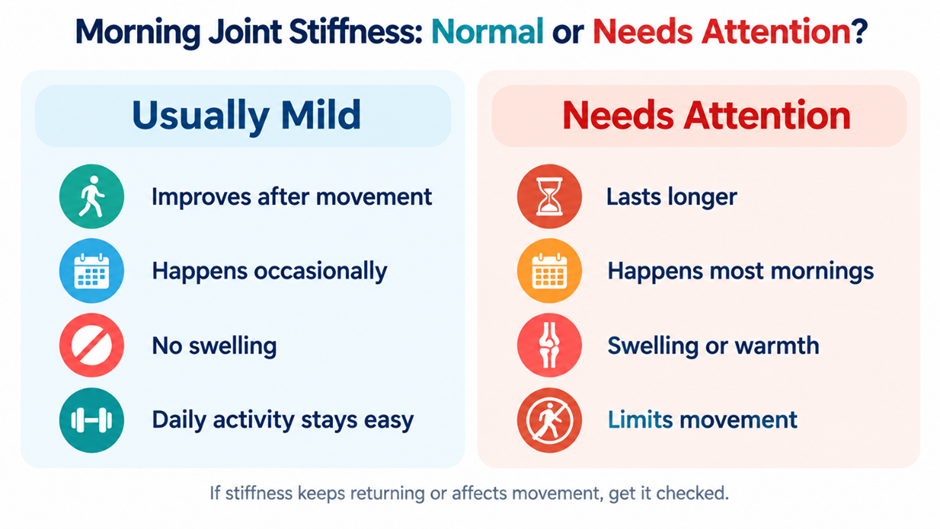
Occasional tightness that improves soon after walking or stretching is often less concerning. Closer evaluation may be useful when the problem:
- Happens on most mornings
- Takes considerably longer to ease
- Affects several areas at once
- Comes with swelling, warmth, or tenderness
- Makes gripping, walking, or dressing difficult
- Gradually becomes more noticeable
If joint stiffness is accompanied by knee discomfort during movement, learn more about possible causes in Why Do You Get Knee Pain While Climbing Stairs?
Normal Tightness After Waking
Several hours without movement can make muscles and surrounding tissues feel less flexible. Once activity begins, circulation and movement usually help the body loosen up.
When discomfort does not settle as expected, conditions associated with osteoarthritis symptoms may be considered, particularly when there is aching or reduced mobility. rheumatoid arthritis symptoms can include longer-lasting tightness, swelling, and tenderness, sometimes involving multiple areas.
Signs Worth Tracking
If morning joint stiffness keeps recurring, note whether any of these appear alongside it:
- Swelling in the fingers, knees, or ankles
- Warmth or redness
- Difficulty making a fist
- Reduced range of movement
- Symptoms affecting both sides of the body
- Unexplained tiredness
Understanding swollen fingers causes or limited movement causes usually requires considering the full pattern rather than one symptom alone.
Also read: For more information on arthritis symptoms such as swelling, morning stiffness, and decreased mobility, read the article “Arthritis: Watch out for swelling, morning stiffness and decreased mobility” from The New Indian Express.
Tracking Your Symptoms
For one or two weeks, record:
- How long the tightness lasts
- Which areas are affected
- Whether movement improves it
- Whether swelling appears
- Whether daily activities are becoming harder
This information can help a doctor distinguish temporary stiffness from a condition that needs further investigation.
Joint Care at Sri Ponni Medical Centre
Sri Ponni Medical Centre can assess recurring stiffness, swelling, pain, and mobility concerns through clinical examination and appropriate investigations. Depending on the findings, care may include physiotherapy guidance, blood tests, imaging, medicines, or specialist evaluation.
For related mobility concerns, read Common Bone and Joint Problems That Can Affect Daily Movement.