Why Do You Get Knee Pain While Climbing Stairs?
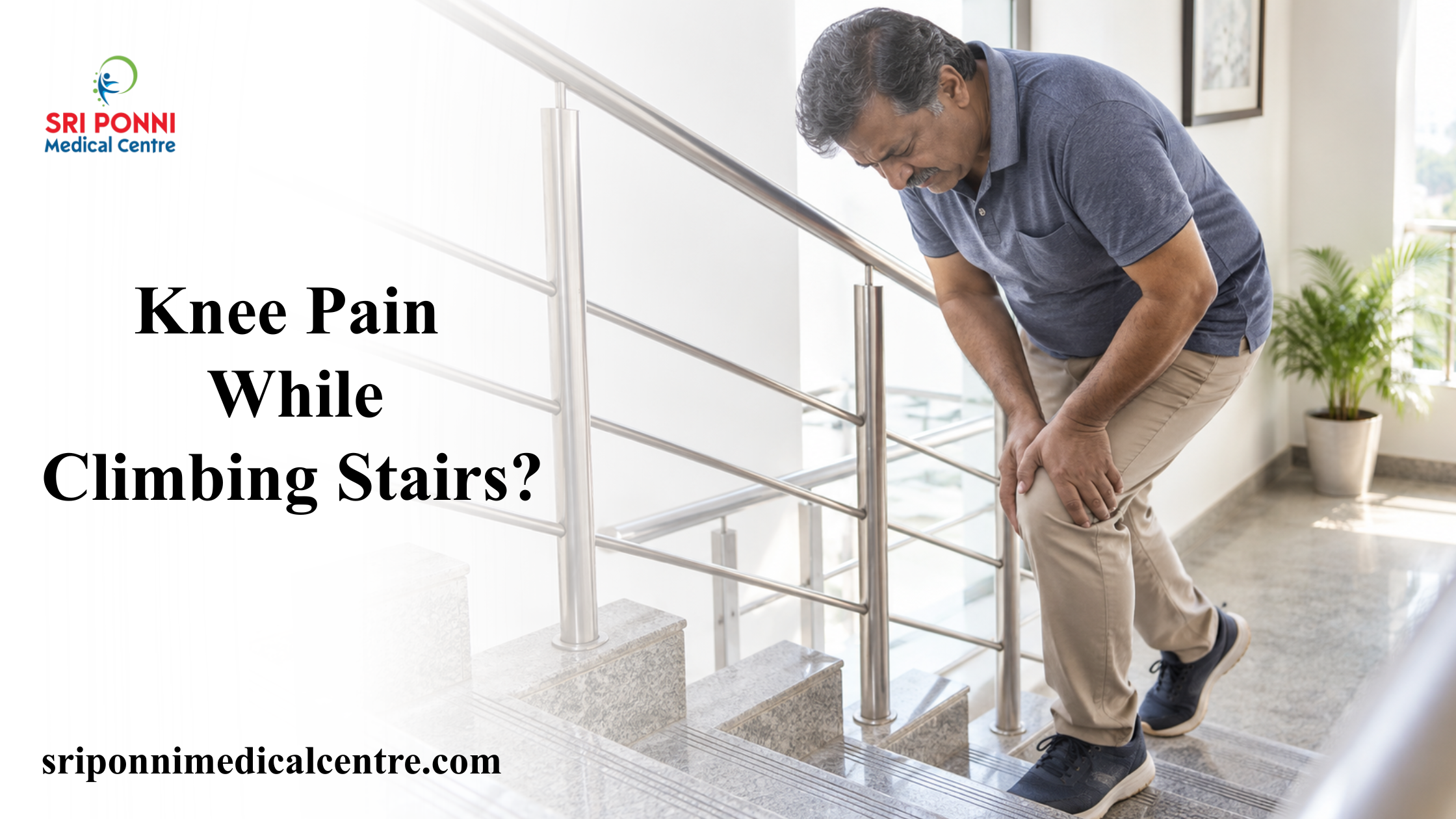
Stair climbing requires the legs to lift body weight while the joint bends more deeply than during normal walking. knee pain while climbing stairs can develop when the structures that cushion, guide, or support this movement become irritated or weakened.
The discomfort may appear after increased activity or return because of muscle imbalance, inflammation, cartilage changes, or an earlier injury. Where the discomfort occurs, how long it lasts, and whether stiffness or swelling accompanies it can provide useful clues about the underlying reason.
Causes of Discomfort
Several conditions can make going up or down steps uncomfortable:
For persistent knee pain or joint discomfort, explore Sriponni’s Orthopaedics services for professional evaluation and appropriate treatment at Sri Ponni Medical Centre.
Why Does Knee Pain While Climbing Stairs Happen More Than During Walking?
Using steps requires greater bending while the thigh muscles work harder to raise and lower the body. This creates more pressure around the kneecap than level walking, making an existing problem easier to notice. Joint stiffness can further restrict smooth movement and increase discomfort during repeated bending.
Joint Care Tip:If using steps repeatedly causes symptoms, avoid continually pushing through the discomfort. Notice whether swelling, clicking, locking, or instability also develops.
When Should It Be Checked?
Mild soreness following unusual physical activity may improve with rest and a gradual return to movement. Medical evaluation becomes more important when symptoms repeatedly return, swelling develops, mobility decreases, or everyday activities become difficult.
For more information on knee osteoarthritis among older adults in India, read the systematic review and meta-analysis on the prevalence of knee osteoarthritis among elderly persons in India.
knee pain while climbing stairs that progressively worsens, begins after an injury, or occurs with locking or giving way deserves professional assessment.
Seek prompt medical attention for severe swelling, visible deformity, inability to bear weight, or sudden intense discomfort following trauma.
What Can Help Reduce the Strain?
Depending on the cause, useful measures may include:
Temporarily reducing activities that aggravate symptoms
Wearing supportive footwear
Gradually strengthening thigh and hip muscles
Following physiotherapy exercises when advised
Maintaining a suitable body weight to reduce excess joint load
Knee and Joint Care at Sri Ponni Medical Centre
Sri Ponni Medical Centre can evaluate persistent joint concerns through clinical examination and appropriate investigations when required. Based on individual findings, care may include activity modification, medicines, physiotherapy, imaging, or further specialist evaluation.
Want to understand other conditions that may affect mobility? Read our guide on Common Bone and Joint Problems That Can Affect Daily Movement to learn about frequent causes, warning signs, and when medical evaluation may be helpful.