Some conditions develop gradually, so a person may feel well even when blood pressure, blood sugar, cholesterol, or other markers begin to change. Preventive Health Screening helps identify possible medical risks before clear symptoms appear. Regular checks allow doctors to notice unusual findings early and decide whether further evaluation is needed.
Early awareness can support timely medical decisions and lifestyle changes. An abnormal result does not automatically mean disease; it may simply indicate that closer assessment is needed. To understand when broader testing may be useful, read our guide on When Should You Get a Full Body Health Checkup?
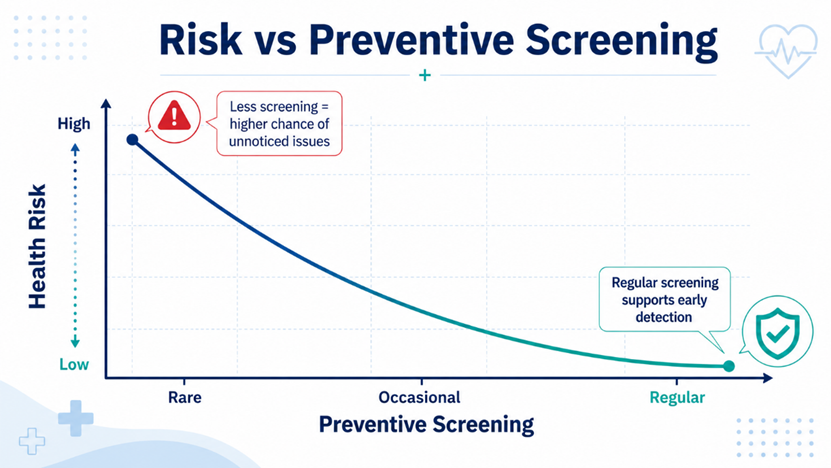
Preventive Health Screening Support Early Detection
Where Early disease detection can identify changes before they progress or cause noticeable problems. A routine medical examination may also reveal risk factors that are easy to miss in everyday life.
Importance of screening
- Identify abnormal changes before symptoms appear.
- Helps detect risk factors earlier.
- Supports timely medical evaluation and follow-up.
- Helps doctors monitor changes over time.
- Reduce the chance of complications through earlier action.
- Gives people a clearer understanding of their current risk profile.
Discuss testing with a doctor if you:
- Have a family history of diabetes, heart disease, or other long-term conditions
- Previously received an abnormal test result
- Have lifestyle-related risk factors
- Live with a condition requiring regular monitoring
The right tests should be selected according to age, medical history, symptoms, individual risk, and previous test results rather than choosing every available test.
This is why early detection is an important part of responsible long-term medical care.
What Can Routine Medical Checks Identify?
A disease risk assessment may include blood pressure, blood sugar, cholesterol, basic blood tests, and liver or kidney function. Additional tests may be recommended according to age, family history, existing conditions, or earlier results.
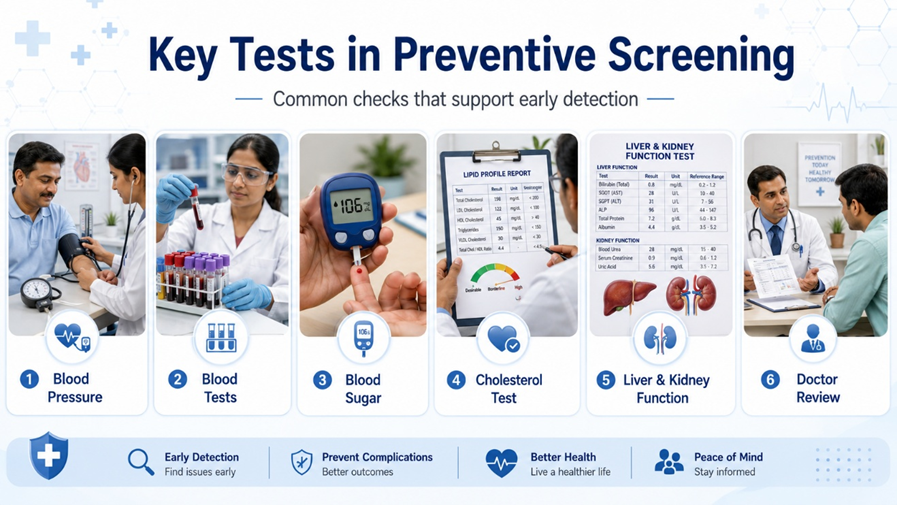
Here, Preventive Health Screening can provide useful information that helps a doctor decide whether continued monitoring or additional tests are needed.
The goal is not to diagnose every possible illness in one visit. Screening helps find changes that may need closer attention. When a result falls outside the expected range, diagnostic follow-up can determine whether repeat testing, monitoring, or treatment is appropriate.
Also read the article on how over 1,700 officials benefited from preventive health screening at Ayushman Arogya Shivir.
Who Should Consider Regular Medical Checks?
People with known risk factors, family history, abnormal reports, or long-term conditions may need closer monitoring. Others can discuss suitable checkup intervals with a doctor based on age, lifestyle, and medical background.
Explore more : Disease Awareness and Preventive Healthcare for Better Health
At Sri Ponni Medical Centre, doctors can guide patients toward suitable tests based on individual risks and provide follow-up advice when results need further evaluation.