When parents notice that a child seems smaller than expected or the number on the weighing scale has stayed the same, it is natural to ask, child not gaining weight why? A single measurement, however, does not always tell the complete story. Doctors look at growth over time and compare measurements with appropriate growth standards to understand whether there is a genuine concern.
Possible reasons can include difficulty eating enough, feeding problems, illness, digestive or absorption problems, or increased nutritional needs. The cause cannot be identified from weight alone, which is why professional assessment is important when concerns persist.
What Should Parents Observe?
Parents can keep track of changes rather than relying only on appearance.
Poor weight gain can sometimes be linked to feeding difficulties, nutrition concerns, or other health problems. Explore Common Health Issues Parents Should Watch for in Growing Kids to learn about other childhood health concerns and warning signs parents should notice.
Look for:
- Changes in appetite or eating habits
- Difficulty chewing, swallowing or accepting foods
- Ongoing digestive problems
- Reduced energy or changes in usual activity
- A growth pattern that appears to slow or flatten
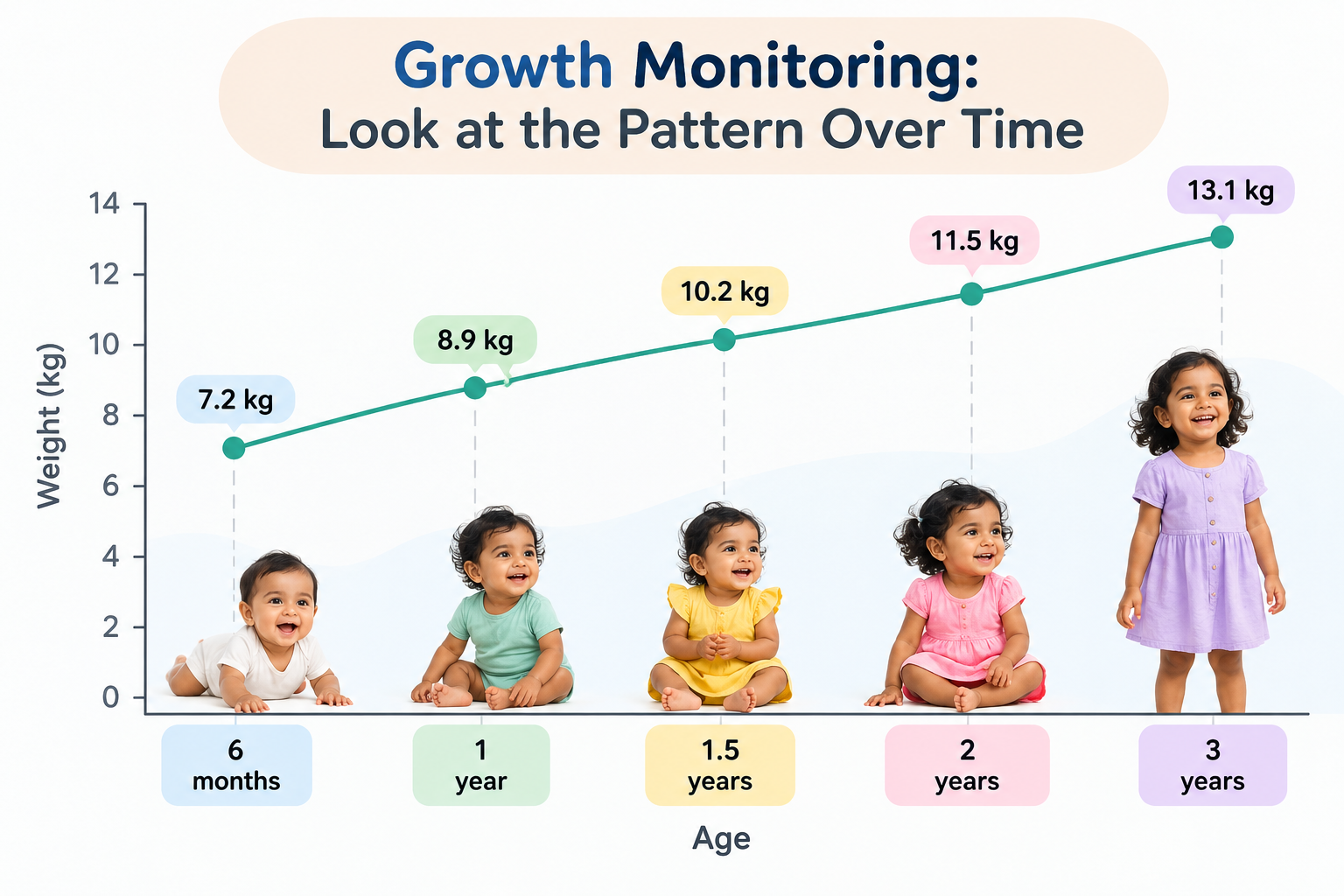
These observations can help a doctor understand the situation. Growth monitoring usually involves repeated measurements and looking at the pattern rather than judging development from one number.
Child Not Gaining Weight Why?
Growth should be checked when there is persistent concern about poor gain, a noticeable change in the growth pattern, or other symptoms affecting eating, health or everyday activity. Doctors may review the child’s history, measurements, diet and overall health before deciding whether further tests or specialist support are needed.
A pediatric nutrition assessment may also help when food intake or feeding difficulties appear to be part of the concern.
Keep a simple record of eating patterns, symptoms and previous growth measurements. This can make the consultation more useful.
Poor weight gain in children may need changes to eating habits and regular growth monitoring. Read the NHS guide on how to help your child gain weight
for practical advice on supporting healthy weight gain in children.
Supporting Healthy Growth
Parents can encourage regular meals, offer a varied diet, and avoid making mealtimes stressful. Keeping a simple record of eating patterns, symptoms, and previous measurements can also help during a consultation.
Sri Ponni Medical Centre provides paediatric assessment for growth concerns, feeding difficulties, and nutritional needs. Doctors can review growth patterns, identify possible contributing factors, and guide families on suitable nutrition, investigations, or follow-up.
Picky eating may make it difficult for some toddlers to get enough nutrients to support healthy growth. Read Picky Eating in Toddlers: When Should Parents Be Concerned? to understand why toddlers refuse certain foods and when feeding habits may need medical attention.