
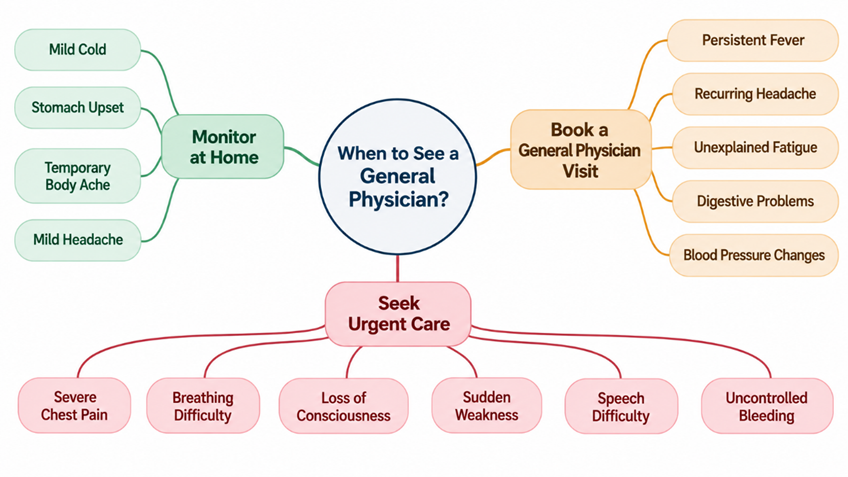
Minor illnesses such as a short-lived cold, mild stomach upset, or temporary body ache may improve with basic care. The important question is whether symptoms are lasting, returning, or becoming harder to manage.
Knowing when to see a general physician can help you decide when everyday complaints need medical evaluation rather than continued self-treatment. A doctor can review your history, examine symptoms, order basic tests when needed, begin treatment, and refer you to a specialist if required.
Common Problems Can Be Evaluated First
Persistent fever symptoms may need assessment when they continue, recur, or occur with other worrying signs. Likewise, unexplained fatigue causes can range from poor sleep and stress to anemia, thyroid problems, infection, or other conditions that require evaluation.
If you want to understand common warning signs and when symptoms may need medical attention, read our guide Symptoms of Common Diseases You Should Know.
When to See a General Physician?
Book an appointment if a problem lasts longer than expected, keeps returning, gradually worsens, or begins affecting sleep, work, eating, or normal daily activity. This is also appropriate for follow-up of diabetes, blood pressure, thyroid disease, or other long-term conditions.
Recurring headache causes should be reviewed when headaches become more frequent, change in pattern, or are associated with nausea, visual symptoms, or difficulty functioning.
Persistent or recurrent symptoms matter even when they are not severe.
When Is Urgent Care More Appropriate?
Routine consultation is not the right choice for every situation. Seek urgent medical attention for severe chest pain, major breathing difficulty, loss of consciousness, sudden weakness, sudden speech difficulty, uncontrolled bleeding, or rapidly worsening illness.
If you are unsure when to see a general physician, think about three things: duration, recurrence, and impact on daily life. These clues help distinguish a minor short-term problem from one that deserves examination.
To understand the broader role of primary care doctors in ongoing medical support, read this guide on the importance of a General Practitioner (GP)
For stomach-related concerns, digestive problems treatment depends on the cause rather than one standard medicine.
General Medicine Care at Sri Ponni Medical Centre
Sri Ponni Medical Centre provides evaluation for common illnesses, routine medical concerns, chronic-condition follow-up, and diagnostic guidance. Patients can receive appropriate first-line care and specialist referral when required. This helps patients start with the appropriate level of care without delaying specialist support when it is needed.
For a broader understanding of everyday medical concerns, read our guide on Important Health Topics Every Patient Should Know to learn about common symptoms, preventive care, tests, and when professional medical advice may be needed.