A toddler may throw up after a stomach bug, food-related illness, a strong coughing episode, or another infection. Vomiting in toddlers is often short-lived, but the main concern is whether your child is becoming dehydrated or showing signs of a more serious problem.
Parents should notice how often it happens, whether fluids stay down, urine output, energy level, and any unusual pain or colour in the vomit. One episode does not always mean something serious, but repeated episodes combined with poor drinking, unusual sleepiness, or worsening discomfort deserve closer attention.
Common reasons it can happen
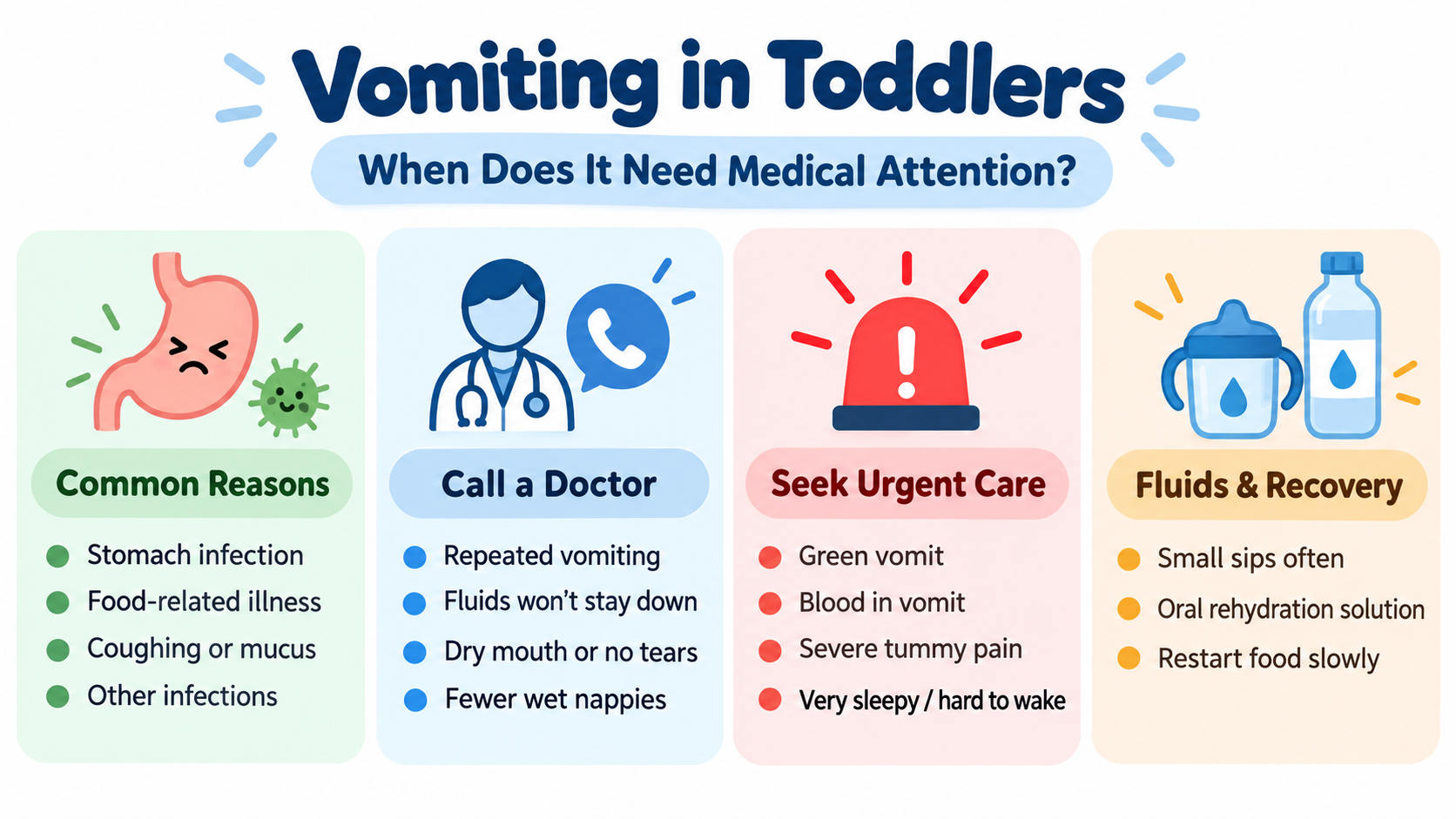
A stomach infection is one of the most frequent causes. Stomach infection symptoms may include diarhea, tummy cramps, or fever. Food poisoning symptoms can look similar and may begin after contaminated food or drink. Strong coughing, mucus, ear infections, or urinary infections can also trigger sickness in some children.
When vomiting is persistent or comes with dehydration or other concerning symptoms, a pediatric evaluation can help identify the cause. Explore our Pediatric Healthcare Services for assessment, treatment guidance, and follow-up care.
When does vomiting in toddlers need medical attention?
If your child remains alert, takes small amounts of fluid, and continues passing urine, close observation at home may be reasonable. Contact a doctor when fluids repeatedly come back up, symptoms continue beyond 24 hours, or dehydration signs appear, such as a dry mouth, no tears, dark urine, or fewer wet nappies. Children who look increasingly unwell should also be assessed.
Seek urgent medical care for:
- Green or yellow-green vomit
- Blood or material resembling coffee grounds
- Severe or persistent abdominal pain
- A swollen abdomen
- Difficulty waking or unusual drowsiness
- Suspected poisoning or a swallowed object
These features can indicate a problem that should not simply be watched at home.
Fluids and recovery
During Vomiting in toddlers, offer small amounts frequently instead of a large drink at once. An oral rehydration solution can help replace water and salts when appropriate.
If fluids stay down and appetite begins to return, food can gradually be reintroduced without forcing meals. Avoid giving anti-vomiting medicines unless a clinician has specifically recommended them for your child.
Vomiting in toddlers can have different causes, and knowing the warning signs can help parents decide when medical advice is needed. For more guidance, read the NHS Inform guidance on vomiting in children and babies
Pediatric care at sri ponni medical centre
Sri Ponni Medical Centre provides pediatric evaluation for vomiting, dehydration concerns, fever, digestive symptoms, and other common childhood illnesses. Doctors can assess hydration, review associated symptoms, and recommend suitable treatment or investigations based on the child’s condition. Follow-up guidance helps parents monitor recovery and understand when further medical care may be needed.
For more everyday childhood concerns, read Common Health Issues Parents Should Watch for in Growing Kids.