A sudden rise in your child's temperature can be worrying, especially when it happens without an obvious reason. Sudden fever in children is usually the body's response to an infection. A temperature of 38°C(100.4°F) or above is considered a fever, but the reading alone cannot determine how serious the illness is.
Parents should also observe their child's behaviour, breathing, feeding, and activity levels. Understanding the possible causes and recognizing warning signs can help you decide whether home monitoring is appropriate or medical attention is needed.
Common Causes of Fever
Several conditions can trigger a rapid temperature rise:
- Viral infections: Common cold, flu, and other respiratory illnesses.
- Bacterial infections: Ear infections, urinary tract infections, or pneumonia.
- Recent vaccination: A temporary temperature rise may occur after certain immunizations.
Viral infection symptoms may include coughing, a runny nose, sore throat, or tiredness. Identifying the exact cause may require medical examination.
Want to learn about other health concerns that may affect your child? Read our guide on Common Health Issues Parents Should Watch for in Growing Kids to understand common symptoms, warning signs, and when medical attention may be needed.
When Should Parents Worry About Sudden Fever in Children?
A child's age and overall condition determine how quickly medical care is required.
01
Monitor at Home
An older child who remains alert, drinks fluids, breathes comfortably, and shows no warning signs may be monitored.
02
Contact a Pediatrician Promptly
- A baby under 3 months has a temperature of 38°C or higher.
- A baby aged 3–6 months has a temperature of 39°C or higher.
- Fever lasts five days or longer.
- Dehydration signs appear, including dry mouth, reduced urination, or fewer wet nappies.
03
Seek Emergency Care
Difficulty breathing, a stiff neck, a non-fading rash, difficulty waking, or a first seizure requires immediate medical attention.
Concerned about your child’s fever? Explore Sri Ponni Medical Centre’s Pediatric Care Services for medical evaluation, treatment guidance, and follow-up support.
Warning Signs Beyond Temperature
Assessing sudden fever in children involves observing more than the thermometer reading. Unusual drowsiness, refusal to feed, or worsening behaviour may indicate a need for prompt evaluation.
Febrile seizure symptoms can include sudden shaking, stiffening, or loss of awareness. During a seizure, protect the child from injury, place them on their side when possible, and never restrain them or put anything in their mouth.
Safe Care at Home
While monitoring your child:
- Offer fluids frequently and continue breastfeeding.
- Record temperature using a digital thermometer.
- Dress the child comfortably without excessive clothing.
- Use age-appropriate fever medicine only when suitable, following medical or label instructions.
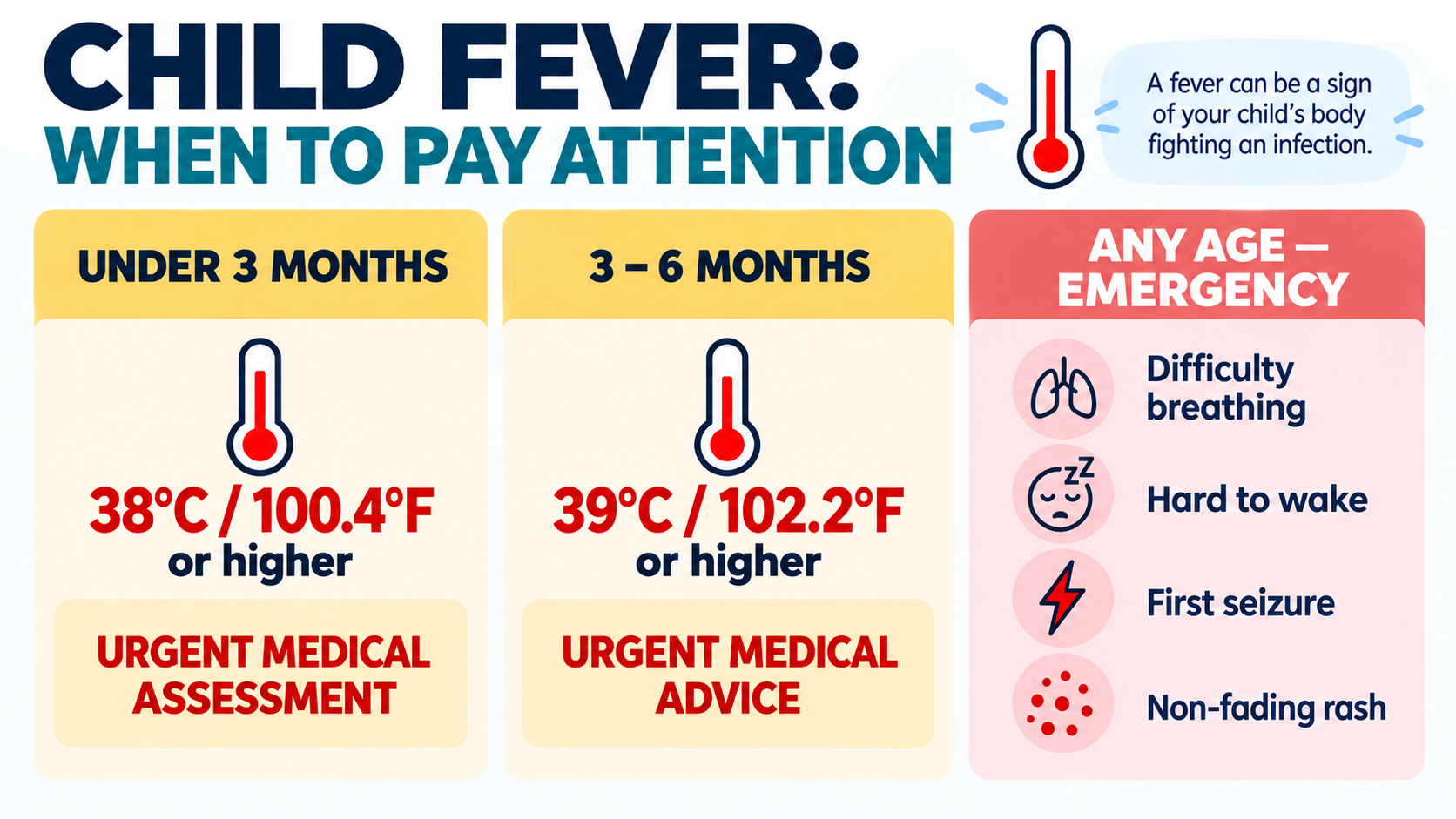
High temperature in babies requires particular attention because young infants need different assessment thresholds.
For more information about unexplained fever in young children, possible serious bacterial infections, and appropriate diagnostic evaluation, read Unexplained fever in young children: how to manage severe bacterial infection on NCBI.
Pediatric Care at Sri Ponni Medical Centre
Sri Ponni Medical Centre supports parents through pediatric consultations, symptom assessment, appropriate investigations, and treatment guidance.
Our medical team can help identify possible causes, explain findings, and recommend suitable follow-up based on your child's condition.
If your child develops an unexplained temperature or concerning symptoms, arrange a pediatric consultation for individual medical guidance.