Lower Back Pain When Sitting: What Could Be Causing It?
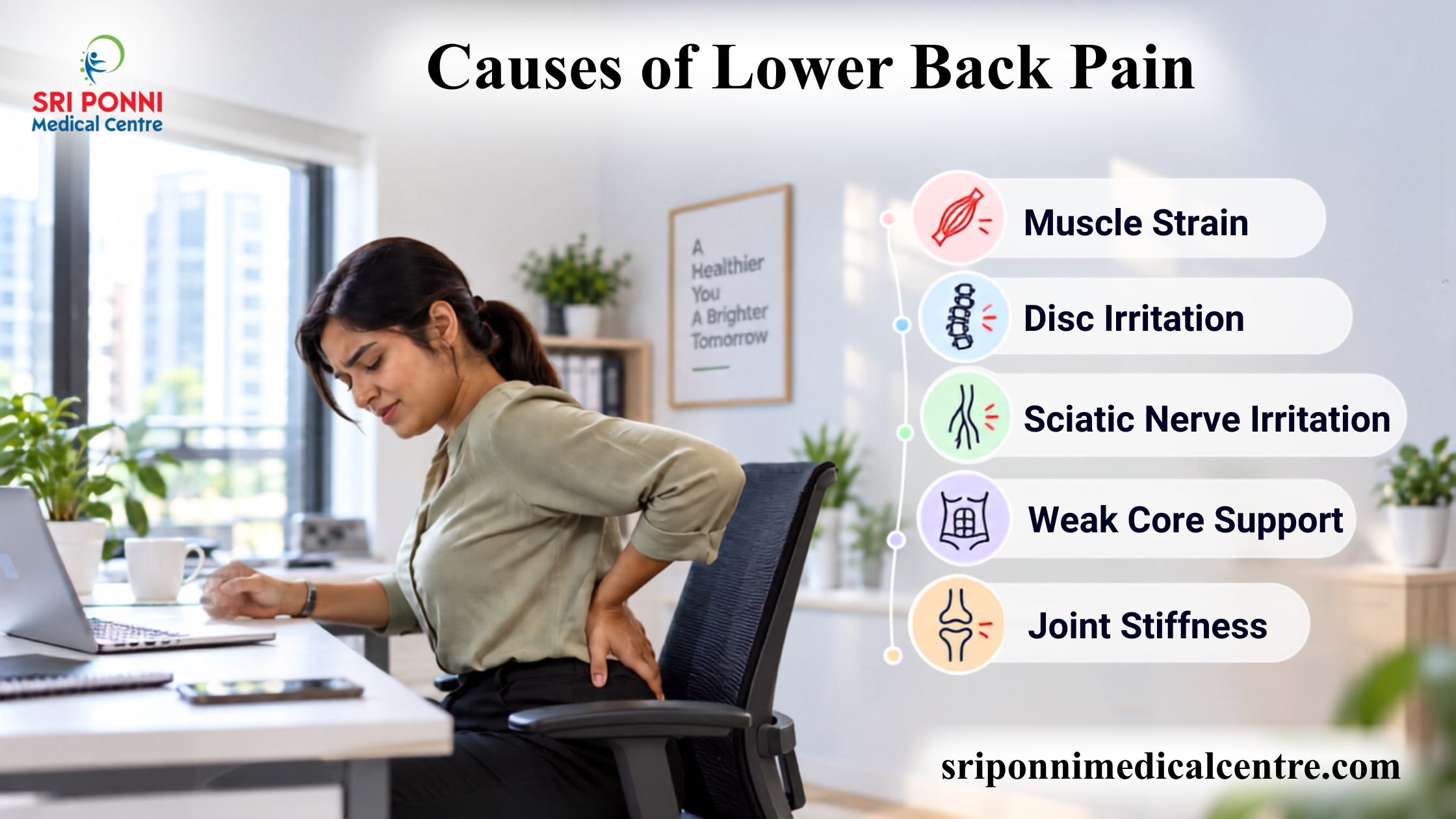
Desk work, long drives, or staying in one position for hours can place continuous stress on the lumbar region. lower back pain when sitting may develop when muscles, joints, discs, or nearby nerves are irritated or not adequately supported.
The discomfort can feel like a dull ache, tightness, stiffness, or a sharper sensation after remaining seated. Whether it improves after standing, travels into the leg, or returns often can provide useful clues about what may be contributing.
Why Can Sitting Make the Discomfort Worse?
A seated position changes how body weight is distributed through the spine. Slouching, limited movement, or an unsupported chair can increase strain on the lumbar area. Poor posture effects may also make surrounding muscles work harder, causing fatigue and stiffness.
For detailed information about Sri Ponni Medical Centre services and orthopedic care, visit our service page and book your appointment.
Common Causes of Lower Back Pain When Sitting
Sciatica symptoms may appear when a nerve is irritated, while a lumbar disc problem can produce discomfort that varies with posture and movement. These conditions need proper assessment rather than being identified from symptoms alone.
“Change position regularly. Short movement breaks reduce continuous loading on the same muscles and joints”
Mild stiffness after unusually long desk work that improves with movement can often be monitored. lower back pain when sitting deserves medical evaluation when it repeatedly returns, lasts for several days, limits work or sleep, or begins travelling into the leg.
For more information about low back pain, refer to the World Health Organization (WHO) guidelines on Backpain
Book a consultation if you notice:
Recurring discomfort despite posture changes
Tingling or numbness in a leg
Increasing stiffness
Muscle strain symptoms that do not settle
Seek prompt medical attention for:
New severe leg weakness
Numbness around the groin or saddle area
Loss of bladder or bowel control
Major trauma or rapidly worsening symptoms
What Can Help Reduce the Strain?
Use lumbar support, keep both feet supported, avoid prolonged uninterrupted desk time, and gradually strengthen trunk and hip muscles. A physiotherapist or doctor can suggest exercises suited to the underlying cause.
For related mobility concerns, read Common Bone and Joint Problems That Can Affect Daily Movement.
Spine and Joint Care at Sri Ponni Medical Centre
Sri Ponni Medical Centre provides evaluation for persistent spine, muscle, and joint concerns. Depending on findings, care may include examination, physiotherapy guidance, medicines, imaging, or further specialist assessment.
Frequently Asked Questions
Why do I get lower back pain when sitting for a long time?
It may be related to poor posture, muscle strain, disc irritation, weak core support, or sciatic nerve irritation.
When should lower back pain when sitting be checked by a doctor?
See a doctor if the pain keeps returning, spreads into the leg, causes numbness or weakness, or does not improve with movement and posture changes.