Common Skin Problems and When to See a Doctor?
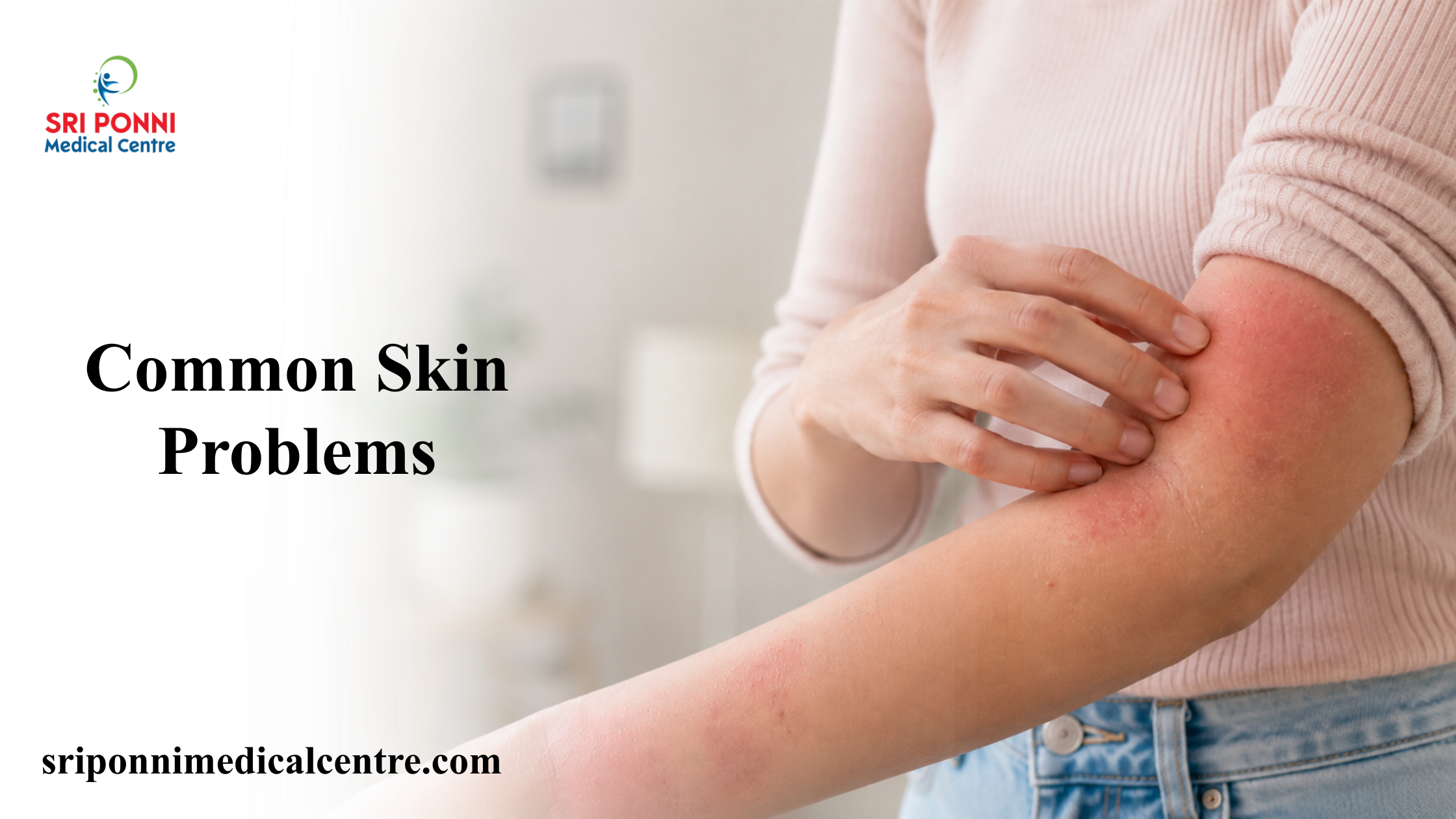
Changes in the skin can appear as itching, redness, dryness, spots, scaling, or color changes. Some are temporary, while others continue, spread, or return after basic care. common skin problems include acne, eczema, fungal infections, allergic rashes, psoriasis, and pigmentation changes.
The appearance alone may not reveal the cause, so duration, severity, triggers, and associated symptoms matter. Knowing which changes can be monitored and which need medical evaluation helps people avoid both unnecessary worry and delayed treatment.
Learn more about the early warning signs of common illnesses in our guide to Symptoms of Common Diseases You Should Know
What Could Be Causing the Change?
Different conditions can look similar. Eczema symptoms often include dryness, itching, and irritated patches, while fungal infection may involve scaling, itching, or ring-shaped areas. Acne may be influenced by oil production, hormones, blocked pores, and inflammation.
Allergic reactions can follow contact with cosmetics, soaps, medicines, plants, or other triggers.
A useful first step is to notice when the change began, whether it is spreading, and whether a new product, medicine, food, or environment may be involved.
When Do Common Skin Problems Need a Doctor?
A simple action guide can help
For recurring breakouts, acne treatment options depend on severity, scarring risk, and previous response. Likewise, itchy rash treatment should be based on the cause rather than repeatedly trying different creams.
Avoid scratching, squeezing lesions, or sharing medicated creams without professional advice.
For more information about different skin conditions and dermatologic disorders, visit MedlinePlus: Skin Conditions.
Which Changes Should Never Be Ignored?
Some common skin problems deserve closer attention when they change, spread, or fail to heal. Watch for a mole that changes in size, shape, or colour; a wound that does not heal; repeated bleeding from the same area; sudden widespread rash; or persistent unexplained itching. These signs do not always indicate a serious condition, but they deserve assessment.
If a concern becomes recurrent, progressive, painful, infected, or disruptive to sleep and daily activities, a doctor can decide whether testing, prescription treatment, or follow-up is appropriate.
Skin Care at Sri Ponni Medical Centre
Sri Ponni Medical Centre provides evaluation for rashes, acne, infections, itching, pigmentation changes, and other persistent dermatological concerns. Patients can receive examination, treatment guidance, and follow-up based on individual findings.
Medical Note:This information is general and does not replace a personal medical consultation. Seek urgent care for severe swelling, breathing difficulty, rapidly spreading rash, or other sudden serious symptoms.
For more information on common health concerns, symptoms, prevention, and when to seek medical care, explore our guide to Important Health Topics Every Patient Should Know.
Frequently Asked Questions
What are the most common skin problems?
Common skin problems include acne, eczema, fungal infections, allergic rashes, psoriasis, and pigmentation changes. The exact cause can differ from person to person.
When should common skin problems be checked by a doctor?
See a doctor if a skin problem persists, spreads, keeps returning, becomes painful, shows signs of infection, or causes sudden swelling or breathing difficulty.