Common ENT Problems: When to See an ENT Doctor?
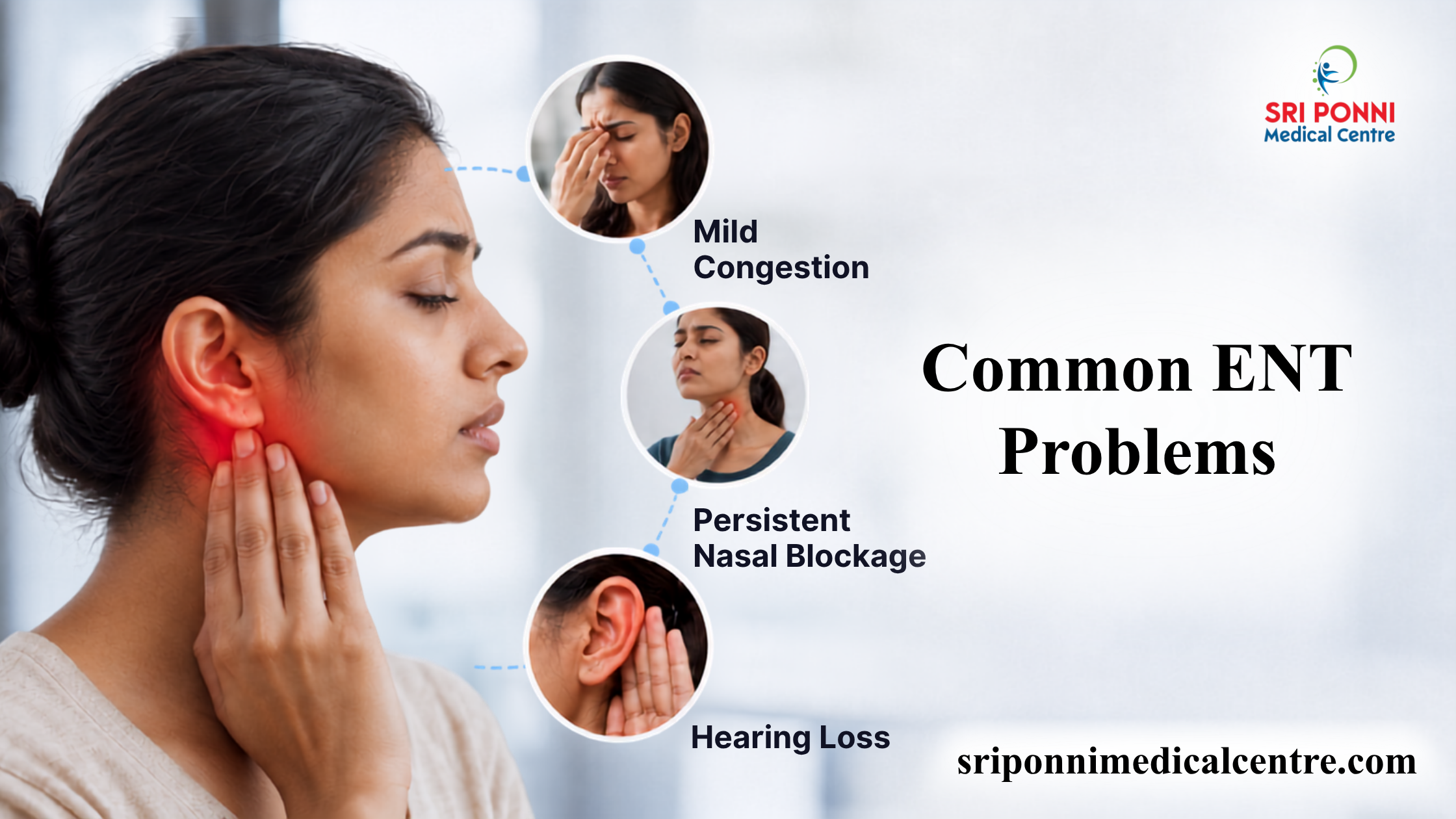
Ear, nose, and throat concerns are common, but not every symptom needs specialist care immediately. Mild congestion, temporary throat irritation, or a short-lived blocked-ear sensation may improve with basic care.
Knowing when to see an ENT doctor becomes important when symptoms persist, repeatedly return, appear suddenly, or interfere with hearing, breathing, swallowing, sleep, or speech. Recognising these warning signs can help patients decide when a routine concern deserves closer medical evaluation.
Persistent ear pain, repeated sinus problems, hearing changes, lasting hoarseness, swallowing difficulty, or recurring throat infections are good reasons to consider an ENT consultation.
Which ENT Problems Are Common?
Where ear infection symptoms may include pain, fullness, discharge, fever, or temporary hearing changes. Repeated nasal congestion and facial pressure may require appropriate sinus problem treatment after the underlying cause is identified.
For more useful information on disease symptoms, prevention, health screening, and other essential healthcare topics, explore our Important Health Topics Every Patient Should Know guide
When to See an ENT Doctor: Monitor or Get Checked?
Symptoms can be grouped by how long they last, how often they return, and how much they affect daily activities.
1. Usually monitor: Mild cold-related congestion, temporary throat irritation, or short-term blocked ears that improve.
2. Book an evaluation: Recurring infections, persistent nasal blockage, repeated sinus discomfort, lasting voice changes, or a persistent sore throat.
3. Seek prompt medical attention: Sudden hearing loss, breathing difficulty, significant bleeding, severe swelling, or rapidly worsening symptoms.
Did you know? Problems in the nose and sinuses can sometimes affect ear pressure because these areas are closely connected.
For more information about common ear, nose, and throat conditions, explore Stanford Children’s Health guide to ear, nose, and throat conditions.
What Happens During an ENT Evaluation?
Hearing evaluation may be recommended when there are noticeable changes, as hearing loss causes can range from earwax and infection to middle- or inner-ear conditions.
Understanding when to see an ENT doctor is especially important when symptoms become one-sided, progressive, recurrent, or begin affecting daily activities. Early assessment can help identify the cause and determine whether medicines, procedures, monitoring, or further testing are appropriate.
Learn more about the early warning signs of common illnesses in our guide to Symptoms of Common Diseases You Should Know
ENT Care at Sri Ponni Medical Centre
Sri Ponni Medical Centre provides evaluation for ear, nose, sinus, throat, hearing, and voice-related concerns. Patients can receive appropriate examination, diagnostic guidance, treatment planning, and follow-up based on their symptoms and individual needs.
Medical Note:This information is general and does not replace individual medical advice. Seek urgent care for severe breathing difficulty, sudden hearing loss, heavy bleeding, or rapidly worsening symptoms.