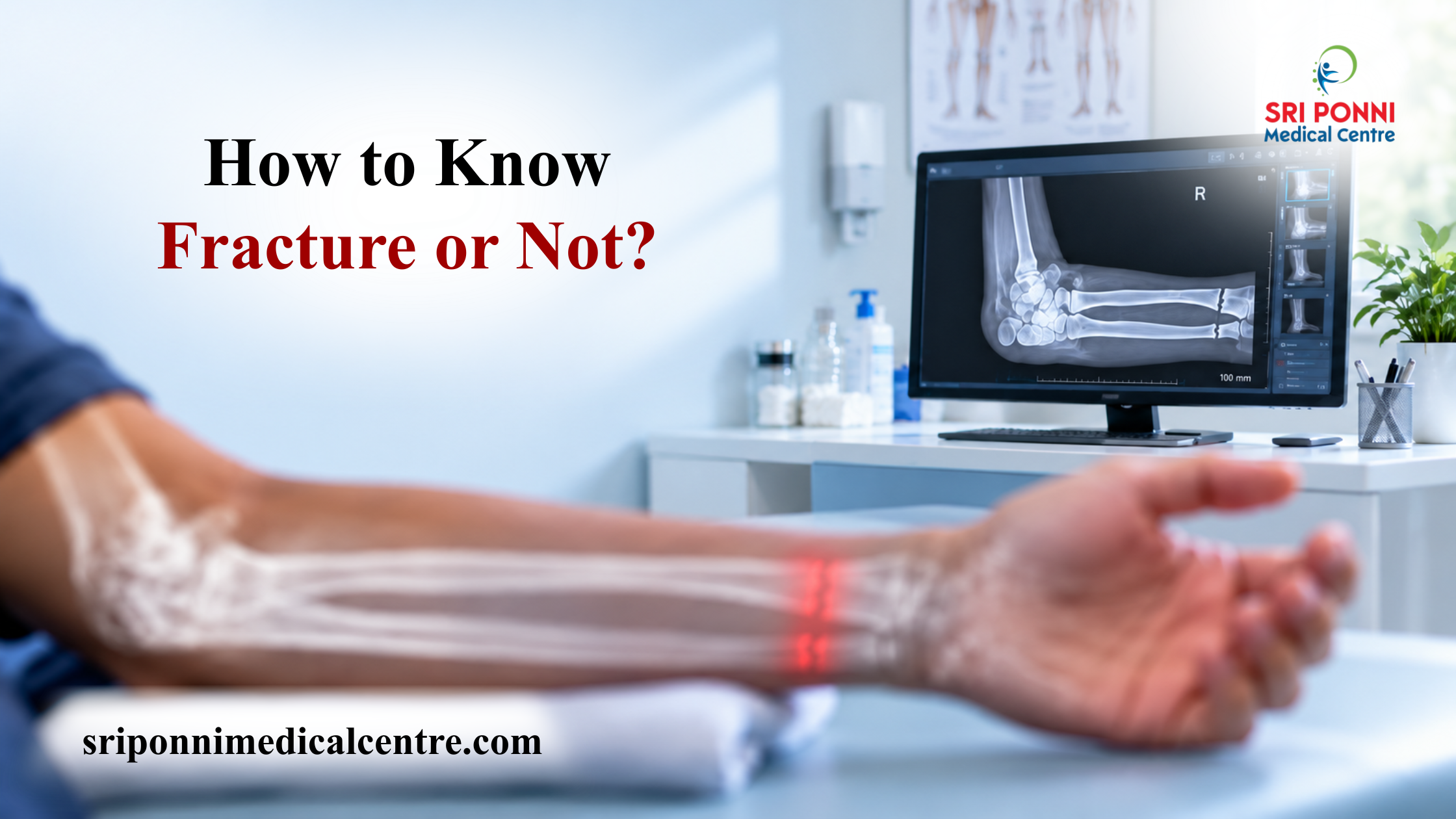
Pain after a fall, twist, sports injury, or direct impact does not always mean a bone is broken. However, certain broken bone symptoms become more concerning when pain is sharply focused in one area, swelling develops quickly, or normal movement becomes difficult.
Some fractures cause an obvious change in shape, while smaller breaks may initially resemble a sprain or severe bruise. Looking at pain, tenderness, function, and how the injury happened can help indicate when medical assessment is needed.
Symptoms That May Point to a Fracture
Common fracture signs include:
- Localized pain
- Swelling
- Bruising
- Tenderness
- Difficulty moving
- Pain with weight-bearing
One symptom alone cannot confirm a break, but several occurring together deserve closer attention.
Read more about the Importance of Complete Diagnosis – Sri Ponni’s Perspective article.
Red Flags That Need Urgent Medical Care
Seek prompt medical care when there is:
- Visible deformity
- Bone or deep wound exposed
- Heavy bleeding
- Numb, pale, or cold fingers/toes
- Inability to use the limb
- Severe swelling after major trauma
Avoid repeatedly bending or straightening the area simply to check whether it is fractured.
Fracture or Sprain: Why Can They Feel Similar?
The difference between sprain vs fracture is not always obvious from symptoms alone. A sprain affects ligaments around a joint, whereas a fracture involves a crack or break in the bone. Both can cause pain, bruising, swelling, and restricted movement, which is why appearance alone may be misleading.
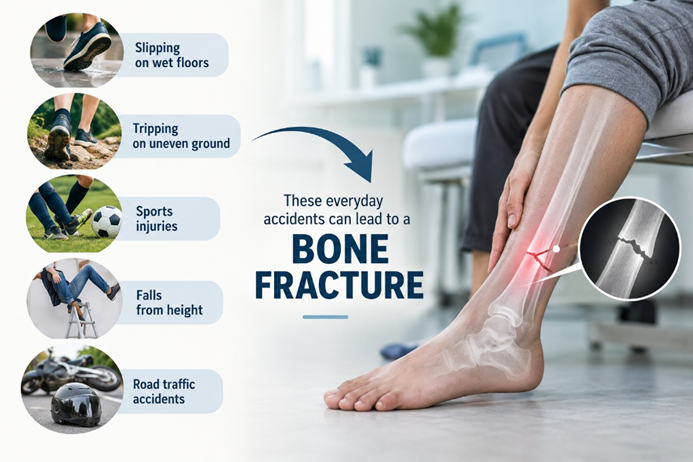
If discomfort remains severe, function is reduced, or broken bone symptoms continue after the initial swelling settles, an orthopedic injury assessment can help identify the injured structure.
For a deeper understanding of the latest developments in bone repair and recovery, read Fracture Healing Research: Recent Insights on PubMed Central.
How Is a Possible Fracture Confirmed?
A doctor usually checks the exact site of tenderness, movement, alignment, circulation, and sensation. An X-ray for fracture can confirm many breaks and show whether the bone remains aligned. Additional imaging may sometimes be needed when symptoms strongly suggest an injury that is not clearly visible on the first X-ray.
What Should You Do after the Broken bone symptoms?
- Rest and support the injured area
- Limit unnecessary movement
- Avoid weight-bearing if it increases pain
- Apply a wrapped cold pack for swelling
- Seek medical assessment when a break is suspected
Fracture Care at Sri Ponni Medical Centre
Sri Ponni Medical Centre provides evaluation for suspected fractures and related injuries, with examination, imaging guidance, treatment planning, and orthopedic referral when required.
For related mobility concerns, read Common Bone and Joint Problems That Can Affect Daily Movement.